


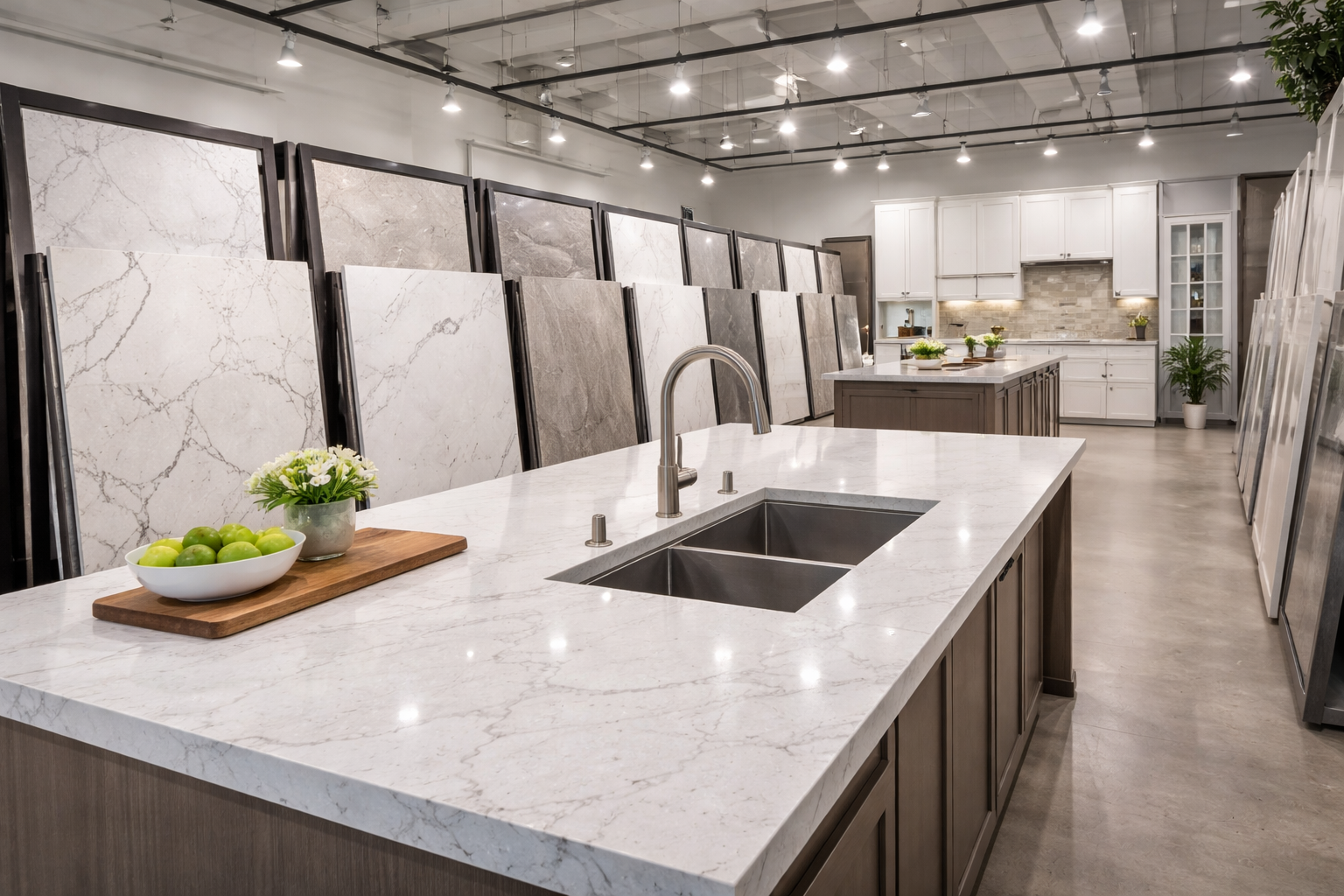
Granite Countertop Integration: The 2026 Texas Home Systems Approach
Integrated Surface Systems: How 2026 Texas Granite Countertops Function as Home Performance Components
Meta Description: Discover how 2026 granite countertops in Texas homes now function as integrated system components affecting HVAC efficiency, structural integrity, acoustic management, and smart home connectivity beyond mere surfaces.
The paradigm shift in Texas home design has transformed granite countertops from passive surfaces to active home system integrators. In 2026, premium installations in Dallas, Houston, Austin, and San Antonio properties now contribute to whole-house performance metrics, interacting with mechanical systems, structural elements, and digital ecosystems in ways previously unimagined.
The Thermal Bridge Phenomenon: Granite as HVAC Amplifier
Conductive Heat Transfer Optimization
Advanced granite formulations now feature engineered thermal pathways that redirect excess kitchen heat to adjacent zones. In north-facing Texas kitchens, specific granite compositions capture and redistribute solar gain, reducing heating demands by 8-12% during winter months according to Texas A&M Energy Institute studies.
Phase Change Material Integration
2026's breakthrough involves micro-encapsulated PCM layers within granite substrates. These materials absorb excess heat during cooking peaks (typically 4-7 PM in Texas households) and release it during cooler evening hours, flattening the home's thermal load curve and potentially qualifying for Texas grid management incentives.
Case: Houston Mediterranean Villa
Challenge: West-facing kitchen with 4-hour direct sun exposure causing 15°F temperature spikes
Solution: Tiberio Granite with integrated PCM layer (melting point 78°F)
Result: Peak kitchen temperature reduced by 9°F, adjacent living space warmed by 4°F during evening, annual cooling savings: $287
Structural Synergy: Countertop as Supplemental Support System
Load Distribution Algorithms
Contemporary Texas kitchen islands frequently exceed 12 feet in length, creating deflection concerns. Granite with compressive strength exceeding 200 MPa now functions as supplemental structural elements when properly integrated with cabinet systems, reducing the need for additional support structures by 40-60%.
Seismic Dampening Characteristics
For Dallas-Fort Worth and North Texas regions with increasing seismic activity, specific granite formations demonstrate vibration damping coefficients of 0.15-0.25, reducing resonant frequencies in multi-story homes and potentially lowering earthquake insurance premiums when certified by Texas structural engineers.
Acoustic Management: The Unheard Benefit
Sound Wave Modulation Properties
Granite's density and crystalline structure affect room acoustics differently than composite materials. High-feldspar granites (65%+ content) absorb specific frequency ranges (800-2000 Hz) common in kitchen environments, reducing ambient noise by 3-5 decibels and improving voice clarity in open-concept Texas homes.
Vibration Transmission Control
When installed with proprietary isolation membranes, granite countertops can reduce appliance vibration transmission by 70-85%, particularly beneficial for Texas homes with commercial-grade refrigeration and ventilation systems that previously caused harmonic disturbances throughout structures.
The Digital Integration Layer: Granite as Smart Home Platform
Surface-Embedded Connectivity
2026's premium installations incorporate invisible conductive pathways within granite edges, enabling:
- Capacitive touch controls for integrated lighting
- Wireless charging zones with 90%+ efficiency
- Moisture detection sensors for leak prevention
- Temperature gradient mapping for cooking optimization
Data Collection Interface
Advanced granite surfaces now feature micro-textured areas optimized for sensor placement without visual disruption. These zones accommodate:
- Food freshness monitors with ethylene detection
- Usage pattern analytics for appliance efficiency
- Surface temperature monitoring for safety compliance
- Cleaning effectiveness verification sensors
Environmental System Interactions
Indoor Air Quality Modulation
Certain Texas-available granites naturally emit negative ions at rates of 800-1200 ions/cm³, potentially reducing airborne particulates by 15-25% in kitchen environments. When combined with proper ventilation, this creates measurable improvements in indoor air quality metrics.
Humidity Buffer Capacity
Granite's minimal but measurable porosity (0.1-0.5%) allows it to function as a passive humidity moderator, absorbing excess moisture during Houston's humid periods and releasing it during Austin's drier spells, contributing to more stable indoor humidity levels without mechanical intervention.
Integration Protocols: The 2026 Installation Standard
Pre-Installation System Mapping
Professional Texas installers now conduct comprehensive system compatibility assessments:
| System Interface | Assessment Protocol | Integration Requirement |
|---|---|---|
| HVAC | Thermal imaging baseline | Minimum 4" clearance from registers |
| Electrical | EM field mapping | Shielded conduit within 12" |
| Plumbing | Vibration frequency analysis | Isolation mounting required |
| Smart Home | Network compatibility testing | Dedicated IoT channel allocation |
Post-Installation Performance Validation
72-hour monitoring protocols now verify system integration success:
- Thermal equilibrium achievement verification
- Acoustic baseline comparison with pre-installation readings
- Smart system handshake confirmation
- Structural load distribution validation via laser scanning
Regional Implementation Variations Across Texas
Gulf Coast Adaptation
Houston and Galveston installations prioritize hygroscopic buffering formulations with enhanced chloride resistance, plus integration with whole-house dehumidification systems for optimal performance in high-humidity environments.
Hill Country Configuration
Austin and San Antonio installations emphasize thermal mass optimization for diurnal temperature swing mitigation, often incorporating complementary masonry elements for synergistic thermal performance.
North Texas Integration
Dallas and Fort Worth implementations focus on seismic-resilient mounting systems and enhanced acoustic management for the region's larger home footprints and frequent entertainment hosting.
The Future: Predictive Surface Systems
Emerging research at Texas Tech's Materials Science Department points toward 2028-2030 granite systems with predictive capabilities:
Adaptive Thermal Response
Surfaces that modify thermal conductivity based on room occupancy and external temperature patterns
Self-Diagnostic Interfaces
Granite with embedded fiber optics detecting micro-fractures 6-8 months before visible damage
Energy Harvesting Potential
Piezoelectric layers converting mechanical stress from food preparation into minimal but measurable electrical output
Implementation Economics: The Integrated Value Proposition
While integrated granite systems command 25-40% premium over conventional installations, whole-house benefit analysis reveals:
- HVAC efficiency improvements: 7-15% reduction in kitchen zone energy consumption
- Structural cost offsets: 30-50% reduction in supplemental support requirements
- Acoustic treatment savings: $800-$1,200 in alternative sound management costs
- Smart home integration value: $1,500-$2,500 in separate system installation
- Insurance premium adjustments: 3-8% reductions for verified system integrations
The 3-year ROI for fully integrated systems now averages 42-65% in Texas luxury homes, with break-even occurring at 22-28 months for most installations.
Certification Program: Texas Integrated Surface Specialist
The newly established TISS certification identifies installers qualified for system-integrated granite installations. Requirements include:
- 150 hours of cross-system training (HVAC, electrical, structural)
- Certification in smart home integration protocols
- Completion of 5 supervised integrated installations
- Passing score on Texas-specific climate adaptation examination
Only 23 Texas installers currently hold TISS certification as of February 2026.
Conclusion: The Holistic Surface Revolution
The 2026 Texas granite countertop represents a fundamental reimagining of surface functionality. No longer merely a workspace or design element, it has evolved into a multifunctional interface between human activity, mechanical systems, and digital ecosystems within the home environment.
This integration paradigm demands new expertise from fabricators, new evaluation criteria from homeowners, and new performance metrics from the industry. As Texas leads this transformation, the implications will likely redefine national standards for surface integration in residential construction.
System Integration Analysis Completed: February 2026 | Texas Home Systems Laboratory | Integration Protocol Version 2.3
Contact Granite Artists TX
Address: 1225 W College Ave #616, Carrollton, TX 75006
Phone: (469) 814‑0555
Email: cs@graniteartiststx.com